
ClearFeed: Decrypting the Paywall — A Decentralized Vision for News Reading
Role: Product Design (Lead), UX Research Collaboration
Team: Yao Zhou (Product Designer), Gurmandeep Kaur (UX Researcher)
Timeline: 8 Weeks (Dec 2024 ~ Feb 2025)
The Core Idea: A Web3 news app concept that replaces rigid subscriptions with pay-per-article micropayments and community-driven content curation.
Awards Recognition



The Uncomfortable Truth: Subscription Fatigue & The Search for Trust
We've all been there: hitting a paywall for one article, then forgetting you had three subscriptions you barely used. The current news model is broken — it demands commitment before value and often sacrifices trust for algorithmic engagement.
I wanted to pay for just the stories I read and have a voice in validating their perspective.
What if news access was flexible, transparent, and owned by the readers?
The result was ClearFeed — an award-winning concept that leverages Web3's decentralized power to reshape the economics and ethics of journalism.
Discovery: The Cracks in the Current Model
Our initial research phase with Gurmandeep focused on dissecting the modern reader's experience. The insights were stark:
The Paywall Friction
Top news is locked away. Casual discovery is constantly interrupted, creating a frustrating, stop-start reading experience.
The Trust Deficit
Readers express concern over media bias. They are actively seeking independent, unfiltered voices that the current ecosystem often fails to surface.
The Subscription Trap
Users are churning annually. They aren't rejecting news; they're rejecting the rigid, all-or-nothing commitment.
These pain points crystallized our opportunity: We needed a design that delivered flexible access, Web3-powered frictionless payment, and user-driven curation.
Designing the Breakthrough: Making Decentralization Feel Familiar
The 8-week timeline was structured to move from insight to interactive prototype:
| Weeks | Phase | Focus |
|---|---|---|
| Weeks 1–2 | Research & Strategy | Desk research, competitive analysis, defining the opportunity. |
| Weeks 3–6 | UX Exploration & Design | Rapid sketching, mid-fidelity wireframing of core flows (pay-per-article, curation), and initial prototyping in Figma. |
| Weeks 7–8 | Prototype Polish & Presentation | Visual design refinement, micro-interaction polish, and building the final award-winning interactive prototype. |
My design approach centered on two critical interactions. The goal was to remove friction from the financial transaction and seamlessly integrate a mechanism for reader-driven trust validation.
1. Mid-Fidelity Wireframes: Speed to Concept
I bypassed detailed upfront UX mapping and focused on visualizing the core experience immediately. Mid-fidelity wireframes allowed us to quickly test the viability of key moments—discovery, the pay-per-article purchase, and content curation—ensuring the overall concept felt intuitive and not overly technical.

Rapid Design System with AI
To move fast without sacrificing consistency, I leveraged AI tools to rapidly generate a foundational design system. This gave us a cohesive visual language — color tokens, typography scale, component library — without weeks of manual setup. It freed up time to focus on what mattered most: refining the core interactions that would define the experience.
Built with


2. Core Interaction Iteration: From Clunky to Clear
I explored how decentralized payment models — particularly Web3-based micropayments — could enable more flexible, seamless access to individual articles. In parallel, I iterated on how a transparent, user-driven rating flow could give readers more control over content curation. These two areas became central to expressing how a decentralized news experience could feel more open, trustworthy, and aligned with user needs.
Payment Flow Iteration: Bringing Web3 to iOS Principles
The Initial Problem: The first payment version felt too much like a crypto app: manual currency input, technical terminology, and high friction.
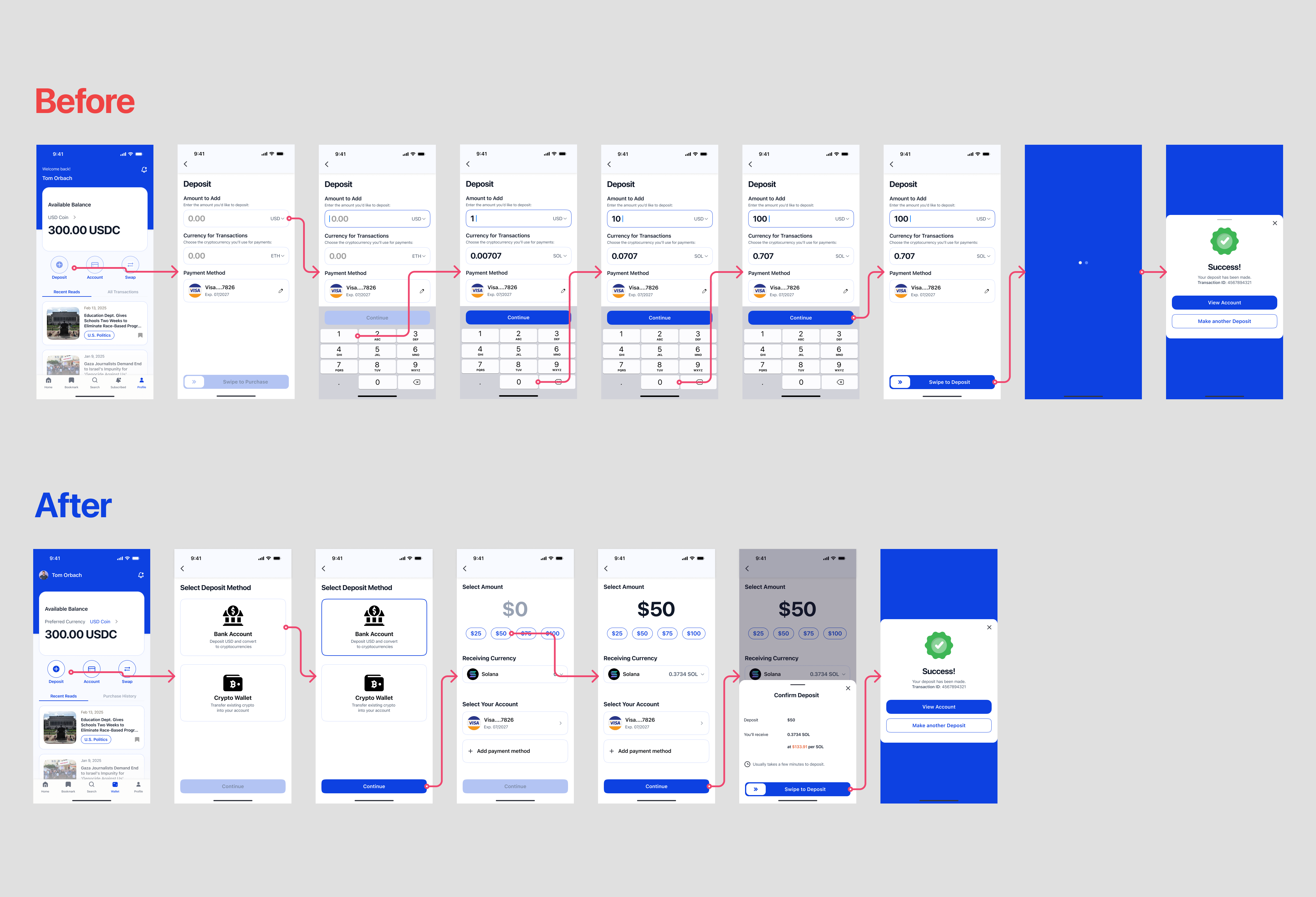
The Fix: I restructured the flow around familiar iOS design principles. I added clear, single-tap entry points, simplified deposit options (Bank / Crypto Wallet), and introduced preset payment amounts with immediate visual feedback.
The Outcome: The final design makes Web3 micropayments feel as familiar and low-friction as a standard mobile purchase.
Rating Flow Iteration: Curation as a Conversation
The Initial Problem: The original star-rating system was multi-step, disconnected from the content, and resulted in user drop-off. It felt like homework.
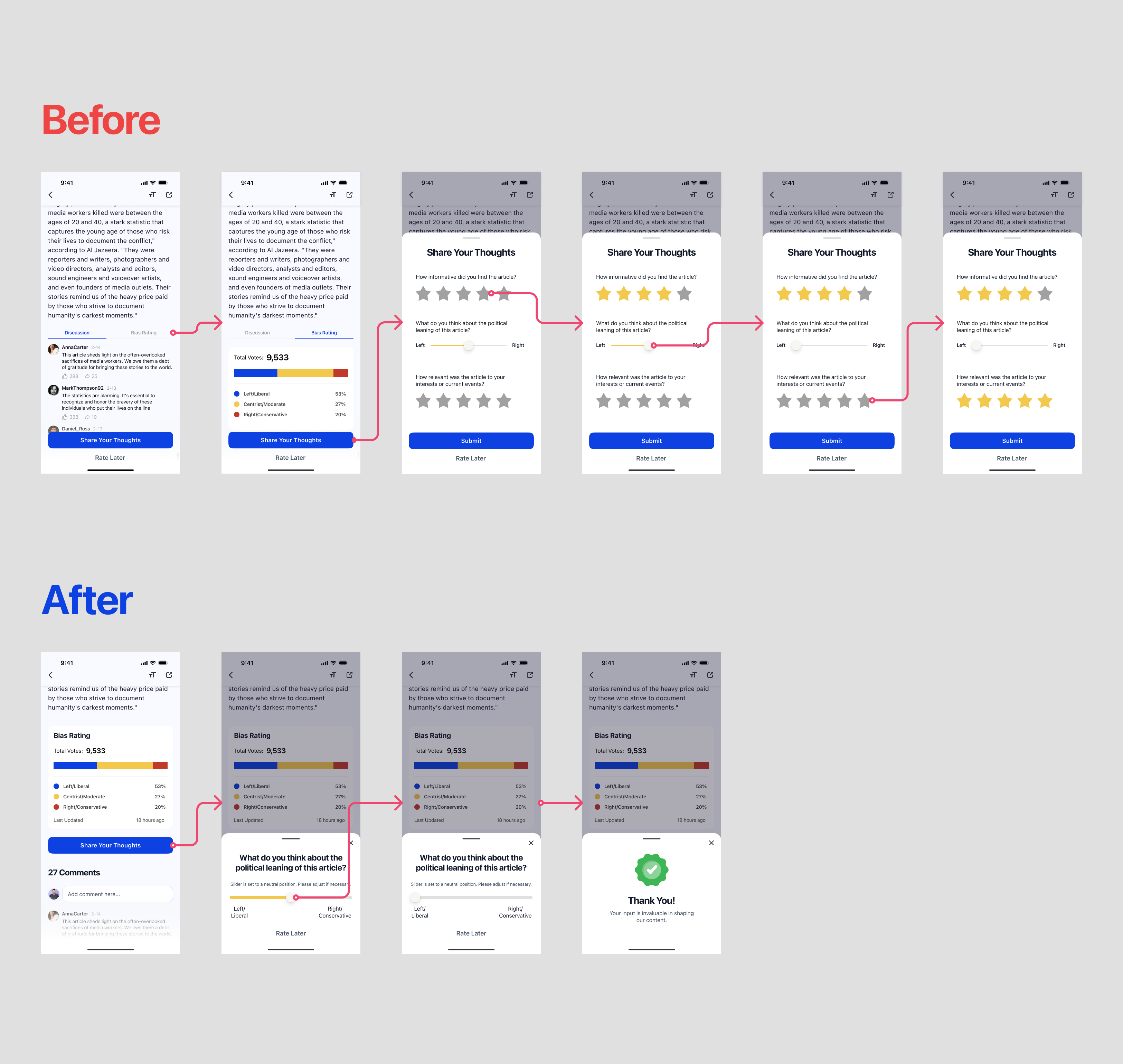
The Fix: I designed an inline rating flow where the user first sees the community's aggregated rating (e.g., Left-leaning, Neutral) to provide context and encourage participation. After a quick rating (political leaning, quality, bias), a simple thank-you message closes the loop.
The Outcome: The updated flow is quicker, more intuitive, and positions content curation as a natural, value-adding part of the reading experience.
The Final Design: ClearFeed's Four Pillars
ClearFeed is a flexible, pay-per-article ecosystem powered by Web3 and community trust. The final prototype showcases how these principles fundamentally change the reading contract:
Discover Independent Journalism
The platform is designed to surface diverse content from independent creators, offering direct support and visibility to voices often sidelined by traditional algorithms.
Flexible Pay-Per-Article
Eliminate subscription anxiety. Readers unlock individual stories on demand, paying only for the value they immediately receive.
Seamless Crypto Micropayments
Low-cost, frictionless Web3-based payments power the experience, enabling minute transactions without platform lock-in.
Transparent User-Driven Curation
Readers rate articles on factors like political leaning (Left, Center, Right) and perceived bias. This transparent, community-vetted data gives readers control over how content is surfaced, promoting trust-driven discovery.
What's Next
This concept proved that Web3 can address real problems in digital journalism — not just theoretically, but in ways that feel intuitive to everyday readers. If I were to keep building ClearFeed, here's where I'd focus:
Test the core flows. Run usability sessions on the payment and rating interactions to see where friction still hides.
Onboard the skeptics. Design a lightweight intro for users who've never touched crypto — make Web3 invisible.
Validate the trust hypothesis. Do community-driven ratings actually change how confident readers feel? Time to find out.
Expand discovery. Push users beyond their filter bubbles into perspectives they wouldn't normally see.
The goal stays the same: a reading experience that's open, trustworthy, and fair to both readers and the journalists they support.
Independent journalism. On your terms.